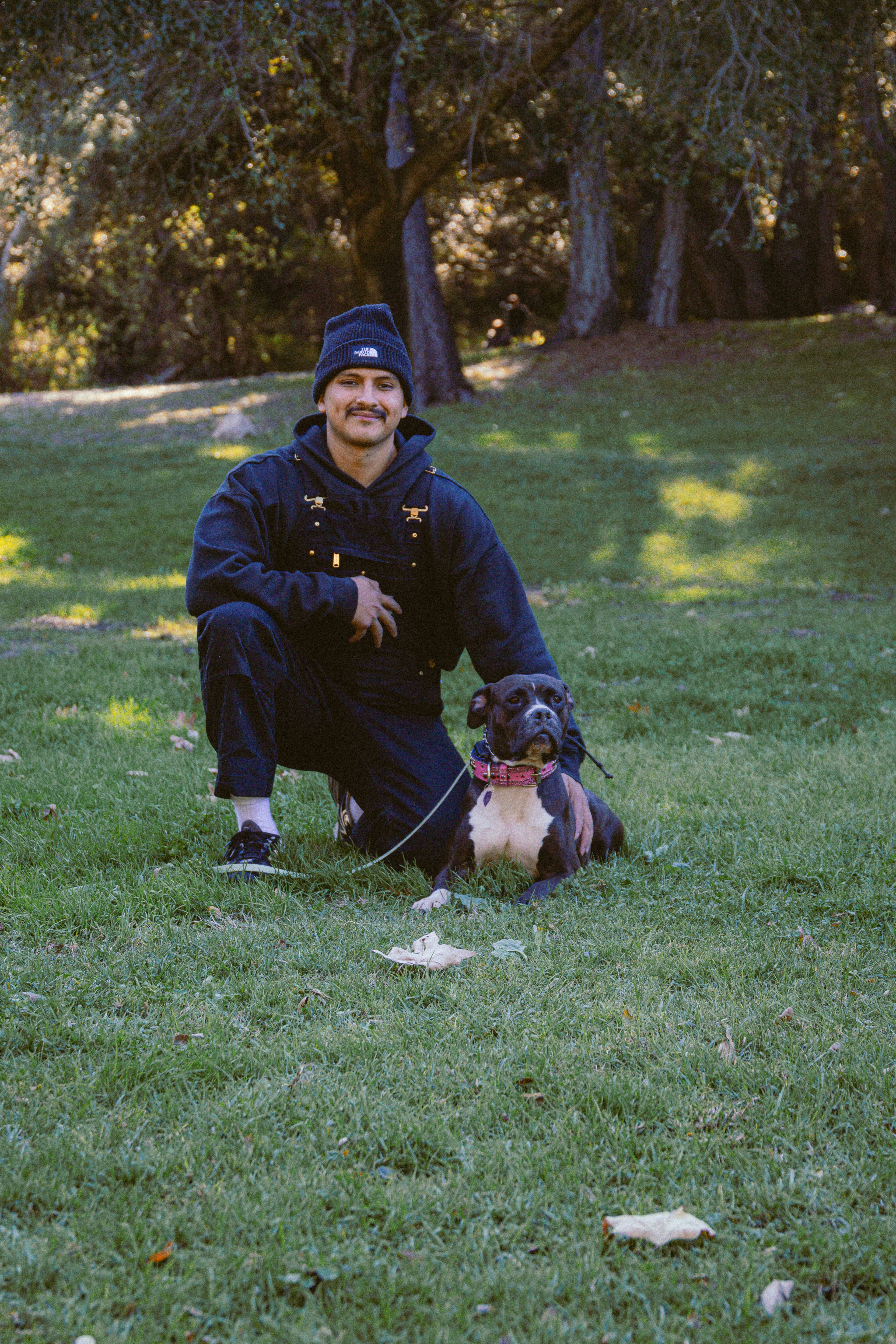
Why Your Dog Pulls in Temecula: The Myth of the Flat Collar
If your dog constantly drags you down the Temecula wine trails, a flat collar is actively making the problem worse by creating massive opposition reflex.
Most owners think leash pulling starts because the dog is excited. That is only part of it. The bigger issue is that the dog has learned the leash means conflict, pressure, and forward progress all at the same time. If you walk through Temecula and every single outing begins with your dog leaning into the collar like a freight train, the dog is not confused. They are committed to a system that has worked for them over and over.
A flat collar is one of the main reasons owners stay stuck. It feels simple and normal, but it gives almost no mechanical advantage to the handler and almost no clean information to the dog. The dog surges forward, the collar tightens across the front of the neck, the handler braces backward, and now both sides are pulling against each other. That is not communication. That is a contest.
Why the walk gets worse instead of better
The average owner repeats the same bad rep hundreds of times. The dog sees another dog, another person, a smell, a horse trail, or an open field, and immediately drives into the collar. The owner responds by tightening up and trying to drag the dog back into position. By the end of the walk the dog has practiced forging, choking, leaning, and ignoring the handler for twenty straight minutes.
That repetition matters more than people realize. Dogs get better at whatever they rehearse. If the leash is always tight, the dog learns that tension is normal. If the dog can hit the end of the leash and still move you three more feet toward what they want, they just got paid for the behavior.
The problem is not only the collar
Owners get trapped thinking the gear alone is the answer. The collar matters, but the mechanics matter more. I can hand someone a proper training collar and still watch them let the dog lead the entire walk because they are late with the correction, soft with the follow-through, or inconsistent about pace and direction.
Leash work starts with a clear rule: the dog does not pull you to anything. Not to a bush. Not to another dog. Not to a person who wants to pet them. Not to a patch of grass they suddenly decided is more important than you. If the dog wants to move through the environment, they do it with you, not against you.
What I change first
The first thing I change is the picture at the start of the walk. Owners often clip the leash, open the door, and immediately let the dog launch out in front of them. From that first second, the dog is already taking control of the outing. I want the dog waiting, yielding to pressure, and leaving the threshold under structure. The start of the walk sets the tone for everything that follows.
Then I clean up the handler mechanics. Most pulling owners hold the leash too long, too loose, or too emotionally. They are constantly nagging the dog with low-level tension. That creates a dog that learns to push through pressure. I want cleaner guidance, faster timing, and a dog that understands they must give to the leash instead of fighting it.
Why I use better training tools
At Shepards K9 I use tools that let me communicate clearly and fairly. A good prong collar, used correctly, spreads directional pressure around the neck so the dog can feel where to yield instead of just choking through a flat band across the throat. It is not about hurting the dog. It is about making the conversation clear enough that the dog stops guessing and stops winning the tug-of-war.
For dogs that are already strong, frantic, or deeply conditioned to ignore the leash, clean structure with the right tool can change the walk fast. The dog stops bracing into pressure because bracing no longer gets them what they want. Once that happens, the handler can finally reward the right state of mind instead of constantly reacting to the wrong one.
Temecula makes weak leash work obvious
Temecula is a bad place to fake obedience. Owners want to move through busier sidewalks, wineries, public trails, shopping areas, and open spaces where distractions come from every direction. A dog that only walks nicely in a quiet cul-de-sac is not leash trained. They are context dependent. The second you add movement, smells, people, or dogs, the truth comes out.
That is why I care less about whether the dog can heel for ten seconds in the driveway and more about whether they can stay accountable when the environment gets interesting. If your dog loses their mind the second they see another dog across the street, the job is not finished. If they can only walk loosely when there are treats in front of their nose, the job is not finished.
The walk is leadership, not exercise
Owners often treat the walk like a favor they are doing for the dog. It is much more important than that. The walk is one of the clearest daily opportunities to establish who controls movement, pace, access, and decisions. If the dog decides where to go, how fast to go, and what matters most, the handler is just attached to the leash.
That same mindset shows up in other parts of life. Dogs that drag owners on walks often blow through thresholds, break place, crowd the door, and ignore recall. The issue is rarely isolated. The leash is just where most owners feel it first.
What owners should stop doing immediately
Stop talking so much during the walk. Stop repeating the dog’s name every three seconds. Stop using food to beg the dog to stay with you when they already know exactly where you are. Stop letting the dog pull for half the walk and then suddenly deciding you want order when another dog appears. Inconsistency is why the problem hangs around.
If your dog already knows how to pressure you into the environment, the fix is not more negotiation. The fix is structure, mechanics, timing, and repetition.
What actually changes when the leash is fixed
Once the leash is under control, everything gets easier. Owners can interrupt fixation sooner. Dogs stop loading up at the sight of distractions. There is less frustration in both directions. Walks become productive instead of draining. More importantly, the dog starts paying attention because they are no longer rehearsing constant opposition.
If your dog is dragging you through Temecula and your arm feels like it is going to get ripped off every morning, stop trying to solve it with a flat collar and hope. The equipment, the handling, and the standard all have to change together. If you want us to do the heavy lifting, start with our dog training program. If the problem is severe enough that you are done fighting it alone, our board and train program is the fastest way to reset the walk for good.